


Structure of a Barcode Printer Printhead
The printhead is the most critical component of a thermal barcode printer. Technically, it is a high-precision electro-thermal assembly integrating hundreds or thousands of heating elements aligned in a straight line.
Below is a detailed breakdown of its structure.
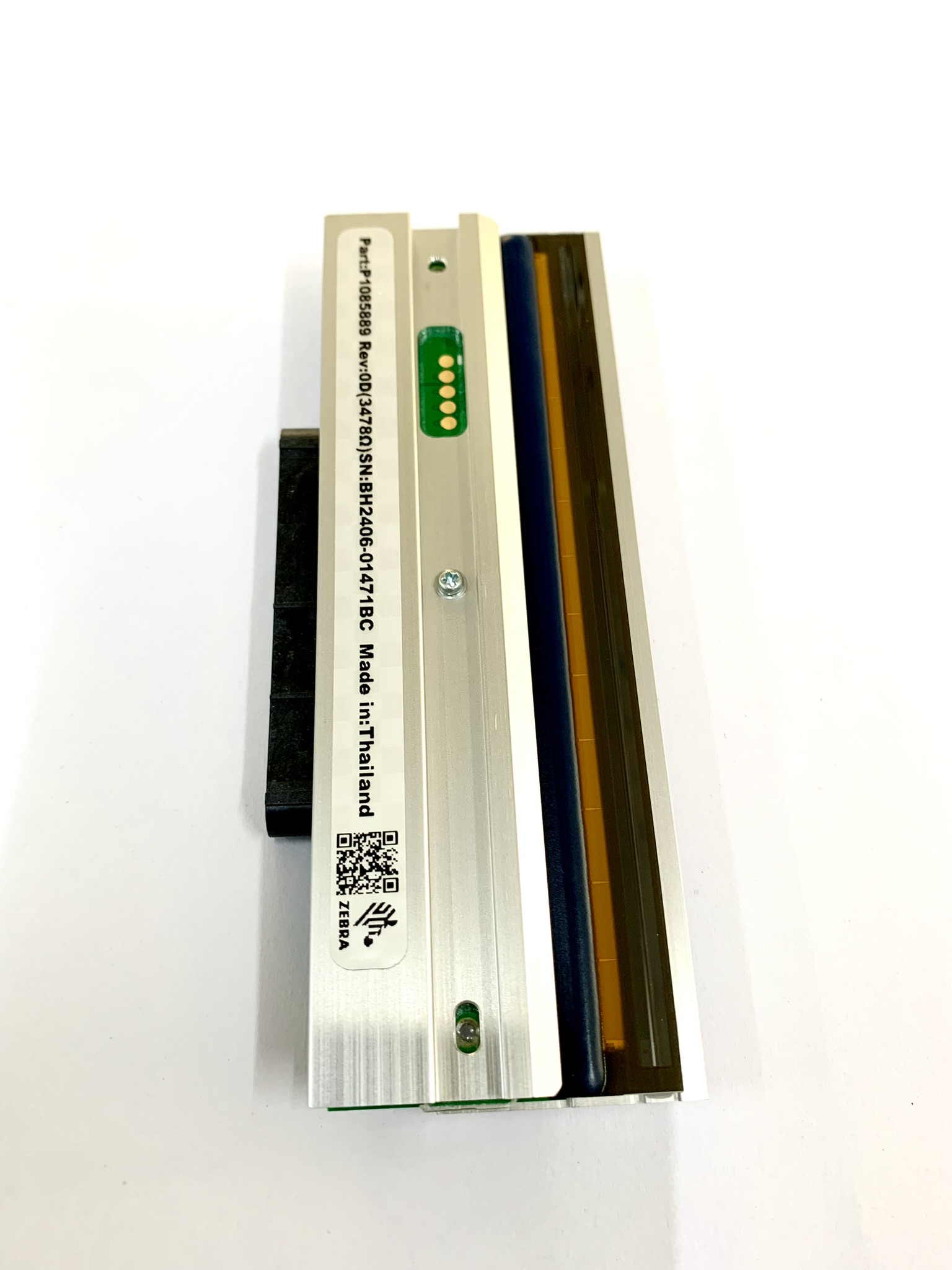
1) Thermal Elements (Heating Dots)
-
Microscopic resistive heaters.
-
Common densities:
-
203 dpi → ~8 dots/mm
-
300 dpi → ~12 dots/mm
-
600 dpi → ~24 dots/mm
-
-
Typically made from thin-film resistive materials such as RuO₂.
-
When electrical current passes through, each element generates localized heat of approximately 150–300°C within milliseconds.
-
Each element represents one printable pixel of the barcode.
2) Ceramic Substrate
-
Commonly aluminum oxide (Al₂O₃).
-
Functions:
-
Electrical insulation
-
Thermal stability and controlled heat dissipation
-
High flatness precision (micron level)
-
-
Serves as the base layer for printed circuits and thermal resistive elements.
.JPEG)
3) Conductive Circuit Layer
-
Ultra-thin copper or gold traces.
-
Delivers electrical signals to each heating element.
-
Designed in a matrix layout to allow independent control of every dot.
4) Protective Overcoat Layer
-
Applied on top of the heating elements.
-
Typically made of glass coating or hard protective materials.
-
Functions:
-
Abrasion resistance (paper/ribbon friction)
-
Chemical resistance (adhesives, solvents)
-
Extended lifespan (30–50 km of media, depending on conditions)
-
This layer largely determines the durability of the printhead.
5) Driver IC (Integrated Circuit)
-
Usually mounted behind the printhead.
-
Receives signals from the printer’s mainboard.
-
Converts data into electrical pulses controlling individual heating elements.
-
Includes control mechanisms for:
-
Temperature regulation
-
Strobe timing
-
Overheat protection
-
6) Temperature Sensor (Thermistor)
-
Monitors real-time printhead temperature.
-
Automatically stops operation if temperature exceeds safe limits.
7) Mechanical Frame and Spring Pressure System
-
Secures the printhead in position.
-
Provides consistent pressure between:
-
Printhead
-
Ribbon (in thermal transfer printing)
-
Label media
-
-
Uneven pressure can cause premature wear or uneven print quality.
Structural Differences by Printing Technology
Direct Thermal Printing
-
Printhead contacts thermal paper directly.
-
No ribbon required.
-
Requires highly stable temperature control.
Thermal Transfer Printing
-
Uses ribbon as an intermediary.
-
Operates at higher temperatures.
-
Protective layer must withstand greater friction.
Key Performance Parameters Influenced by Structure
-
DPI (Resolution)
-
Heating element resistance
-
Operating voltage
-
Pulse duration and activation timing
-
Printhead lifespan (measured in kilometers of printed media)
Practical Operational Perspective (Industrial Context)
In industrial label printing environments:
-
Approximately 80% of printhead failures result from:
-
Protective layer wear
-
Paper dust and adhesive buildup
-
Incorrect pressure settings
-
-
Around 20% are due to electrical or driver IC failures.
For companies providing printhead replacement services, understanding this structure enables:
-
Accurate failure diagnosis
-
Differentiation between natural wear and improper usage
-
Professional recommendations on compatible ribbons and label materials to extend printhead lifespan